
How Bitcoin Works
Understand the revolutionary technology behind the world's first decentralized digital currency

How Bitcoin Works
Understand the mechanics behind the decentralized network, mining, transactions, and security.
Bitcoin History
Explore the origins of Bitcoin, from Satoshi Nakamoto's whitepaper to key milestones.

Terminology Glossary
Demystify common Bitcoin terms and concepts with our comprehensive glossary.
What Is Bitcoin?
Bitcoin is the world's first decentralized digital currency, launched in 2009. It's a revolutionary peer-to-peer electronic cash system that enables direct transactions without banks, governments, or any central authority.
Unlike traditional money, Bitcoin exists entirely online and is powered by a global network of computers. Every transaction is recorded on a public, transparent ledger called the blockchain, making the system secure, open, and resistant to censorship.
The Network
Bitcoin (with capital 'B') refers to the entire network and protocol. It's a decentralized system running on thousands of computers worldwide, maintained by a global community of miners, developers, and users.
The blockchain serves as a public ledger, recording every transaction in an immutable chain of blocks. This transparency allows anyone to verify transactions while maintaining user privacy through cryptographic addresses.

With no single point of control or failure, Bitcoin operates 24/7/365 across borders, enabling anyone with internet access to participate in the global economy.
The Currency
bitcoin (with lowercase 'b') refers to the digital currency units. Each BTC can be divided into 100 million smaller units called satoshis, making it possible to transact in tiny fractions.
With a fixed supply cap of 21 million bitcoins, it's designed to be scarce and deflationary by nature - no government or entity can print more. This predictable supply makes Bitcoin fundamentally different from traditional currencies that can be inflated at will.

Bitcoin offers fast, borderless transactions with lower fees than traditional international transfers, operating independently of banking hours or geographic restrictions.
The Original Vision
In 2008, an individual or group using the pseudonym Satoshi Nakamoto published the Bitcoin whitepaper titled "Bitcoin: A Peer-to-Peer Electronic Cash System".
Read the WhitepaperHow Bitcoin Works
Bitcoin combines cryptography, peer-to-peer networking, and economic incentives to create a secure, decentralized monetary system that operates without trusted intermediaries.
Understanding the core mechanisms behind Bitcoin reveals why it's considered one of the most significant technological innovations of the 21st century.
Transactions
When you send bitcoin, you're creating a transaction that transfers ownership from your wallet to another. Each transaction is digitally signed using your private key, proving you own the funds.
Transaction Anatomy
- •Inputs: References to previous transactions (your UTXOs)
- •Outputs: New UTXOs created for recipients
- •Signature: Cryptographic proof of ownership using your digital signature
Mining & Security
Mining is the process of adding new transactions to the blockchain. Miners compete to solve complex mathematical puzzles, and the winner gets to add the next block of transactions.
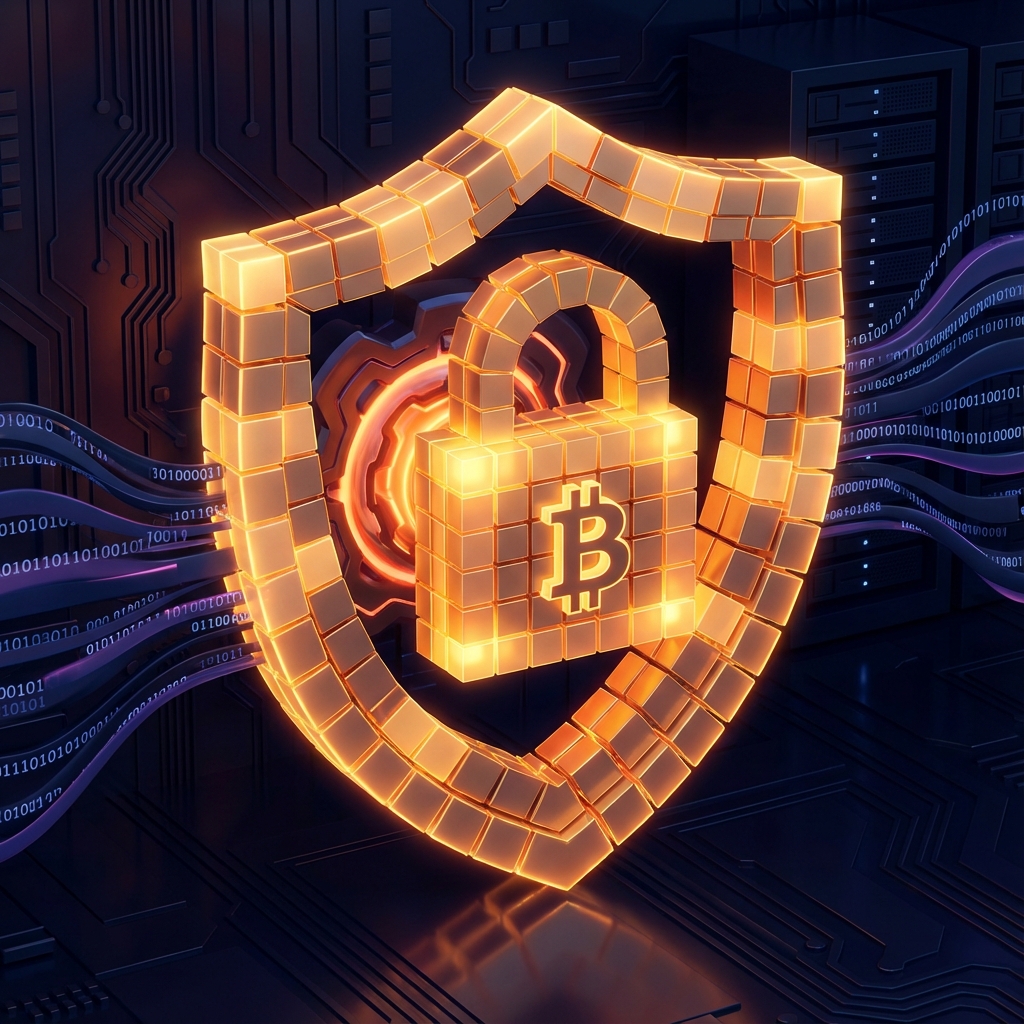
Proof-of-Work
This computational work requires significant energy, making it extremely expensive to attack the network. The more hash rate (computing power) on the network, the more secure Bitcoin becomes.
Each block contains a reference to the previous block, creating an immutable chain. Changing historical data would require redoing all the computational work since that block - practically impossible.
Decentralization
Bitcoin operates on a peer-to-peer network of thousands of nodes (computers) worldwide. No single entity controls the network, making it censorship-resistant and resilient.
Full Nodes
Independently verify all transactions and blocks, ensuring network rules are followed.
No Central Authority
Consensus is reached through the proof-of-work mechanism, not by any governing body.
Cryptography
Cryptography is fundamental to Bitcoin's security. It enables:
- •Ownership verification through public-key cryptography without revealing private keys
- •Transaction integrity via cryptographic hashes that make tampering evident
- •Address generation from public keys, providing privacy and security
How to Get Bitcoin
There are several ways to acquire bitcoin, from cryptocurrency exchanges to peer-to-peer transactions
Cryptocurrency Exchanges
The most common way to buy bitcoin is through regulated cryptocurrency exchanges like Coinbase, Kraken, or Binance. These platforms allow you to purchase bitcoin using traditional payment methods.
Getting Started on an Exchange
- •Create an account: Sign up with your email and create a secure password
- •Verify your identity: Complete KYC (Know Your Customer) by providing government ID and proof of address
- •Add payment method: Link your bank account, debit card, or other payment options
- •Buy bitcoin: Choose the amount to purchase (you can start with as little as $1), review fees, and confirm
Alternative Acquisition Methods
Beyond exchanges, there are several other ways to obtain bitcoin depending on your preferences and needs.
P2P Platforms
Trade directly with other users through peer-to-peer marketplaces like LocalBitcoins or Bisq for more privacy and payment flexibility.
Bitcoin ATMs
Purchase bitcoin with cash at Bitcoin ATMs found in many cities, though fees are typically higher than online exchanges.
Earn Bitcoin
Accept bitcoin as payment for goods or services, earn it through employment, or participate in the Bitcoin network as a miner.
Gift & Transfer
Receive bitcoin as a gift from friends or family, or through promotional campaigns and rewards programs.
Important Considerations
- •Start small: Begin with a modest amount to familiarize yourself with the buying process and wallet management
- •Compare fees: Different platforms and payment methods have varying fee structures - bank transfers are typically cheaper than card purchases
- •Security first: Enable two-factor authentication (2FA) and use strong, unique passwords on all platforms
- •Beware of scams: Only use reputable, regulated exchanges and never share your private keys or seed phrases
How to Use Bitcoin
Learn how to store, send, receive, and spend your bitcoin securely and efficiently
Storing Your Bitcoin
A Bitcoin wallet is software that stores your private keys and enables you to send and receive bitcoin. Choosing the right wallet depends on your security needs and usage frequency.
Hot Wallets
Connected to the internet for convenient access. Ideal for everyday transactions and smaller amounts.
Examples: Mobile apps, desktop software, exchange wallets
Cold Wallets
Offline storage for maximum security. Best for long-term holdings and larger amounts.
Examples: Hardware wallets (Ledger, Trezor), paper wallets
Critical: Never share your private keys or seed phrase with anyone. These give complete control over your bitcoin. If lost, your funds are unrecoverable.
Sending & Receiving Bitcoin
Bitcoin transactions are straightforward once you understand the basics. You'll use Bitcoin addresses (similar to email addresses) to send and receive funds.
Receiving Bitcoin
- •Open your wallet and locate your Bitcoin address (a long string starting with 1, 3, or bc1)
- •Share this address or QR code with the sender
- •Wait for confirmations (typically 10-60 minutes for full security)
Sending Bitcoin
- •Enter the recipient's Bitcoin address (triple-check for accuracy - transactions can't be reversed!)
- •Specify the amount to send in BTC or your local currency
- •Choose transaction fee (higher fees = faster confirmation)
- •Review and confirm the transaction
Spending Bitcoin
Bitcoin's growing acceptance means you can use it for an increasing range of purchases, from online shopping to real-world transactions.
Online Merchants
Major companies like Microsoft, Overstock, and Newegg accept bitcoin payments. Payment processors like BitPay make it easy for businesses to accept BTC.
Gift Cards
Convert bitcoin to gift cards for popular retailers through services like Bitrefill, extending your spending options indirectly.
Bitcoin Debit Cards
Load bitcoin onto crypto debit cards that automatically convert to local currency at point of sale, accepted anywhere traditional cards work.
Peer-to-Peer
Pay individuals directly for services, send money internationally, or exchange with friends - fast, borderless, and without intermediaries.
Security Best Practices
- •Use hardware wallets for significant holdings to protect against online threats
- •Back up your wallet by securely storing your seed phrase in multiple physical locations
- •Verify addresses carefully before sending - double-check every character as transactions are irreversible
- •Start with small amounts when testing new wallets or services
- •Keep software updated to ensure you have the latest security patches and features
- •Be aware of taxes as many jurisdictions treat bitcoin as property subject to capital gains tax
Key Bitcoin Concepts
Essential terminology to deepen your understanding of the Bitcoin ecosystem
Blockchain
The immutable public ledger recording all Bitcoin transactions
Private Key
Your secret code that proves ownership and allows spending
Wallet
Software managing your keys and enabling Bitcoin transactions
Transaction
Transfer of bitcoin value between addresses on the network
Mining
Process of validating transactions and securing the network
Peer-to-Peer
Decentralized network where participants interact directly
Ready to Get Started?
Explore our tools to analyze Bitcoin wallets and manage your own with privacy-first solutions